MiSTer FPGA Addon Boards
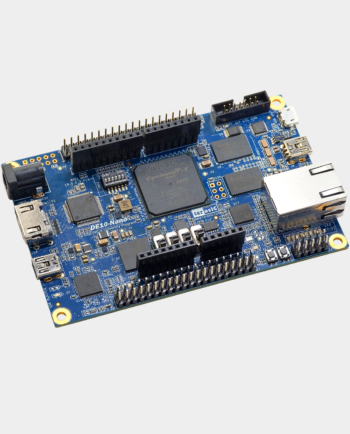
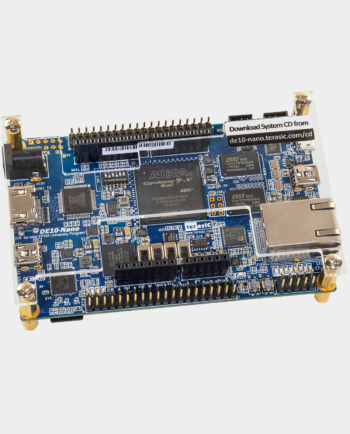
MiSTer addon boards expand the functionality of compatible FPGA boards, including the Terasic DE10-Nano and Retro Remake MiSTER Pi. Available expansion boards add features such as SDRAM memory, analog and digital video connectivity, USB ports and real-time clock support. For many MiSTer setups, an SDRAM module is one of the most useful first addons, providing the memory required by many computer, console and arcade cores.
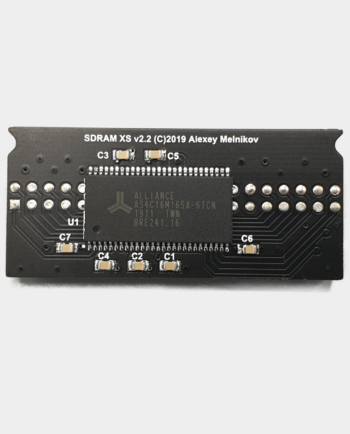
The MiSTer SDRAM board provides the dedicated SDRAM memory required by many computer, console and arcade cores. On the Terasic DE10-Nano, the SDRAM module connects directly to the JP1 (GPIO 0) connector.
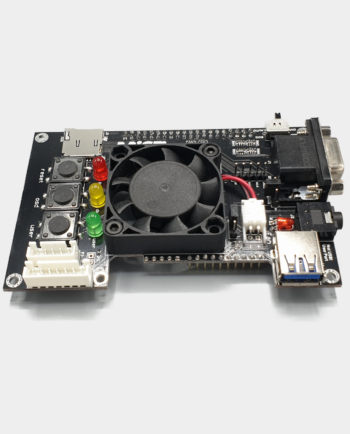
The MiSTer Analog IO board provides analog video output via its VGA (DB15) connector, supporting VGA, RGB and YPbPr signals depending on the cable used. It also provides analog and digital audio through a 3.5mm Mini-TOSLINK jack, three user buttons, three status LEDs, a secondary microSD card slot, fan controls and a User IO connector for SNAC adapters. On the Terasic DE10-Nano, the board connects to the JP7 (GPIO 1) connector.
The MiSTer A/V (Audio/Video) Pro v9.2 IO board is a modular design combining a Digital IO base board with a removable A/V module. With the A/V module fitted, it provides 24-bit analog video output through an ADV7125 video DAC, analog stereo audio via a dedicated audio DAC, Mini-TOSLINK digital audio, ADC input, simultaneous HDMI and analog video output, three user buttons, three status LEDs, a secondary microSD card slot and a SNAC port. The A/V module can be removed to leave the second GPIO connector available for dual SDRAM configurations.
The MiSTer Digital IO board leaves both GPIO connectors free while providing a built-in on/off power switch, Mini-TOSLINK and full-size TOSLINK digital audio outputs, a 3.5mm ADC input for tape functionality, three user buttons, three status LEDs, a secondary microSD card slot, User IO port and headers for external buttons and LEDs. With both GPIO connectors available, the Digital IO board also supports dual SDRAM configurations.
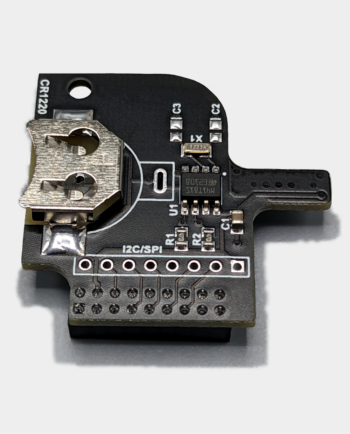
The MiSTer RTC board provides real-time clock functionality for supported MiSTer cores, maintaining the correct date and time when the system is offline or unable to synchronise its clock over the internet. The RTC board connects to the LTC connector.
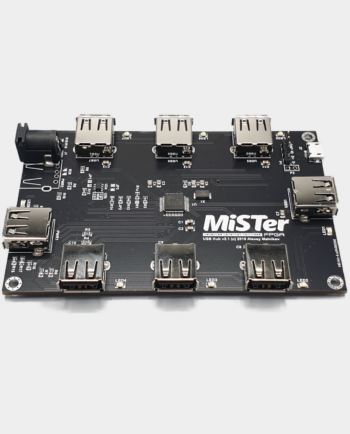
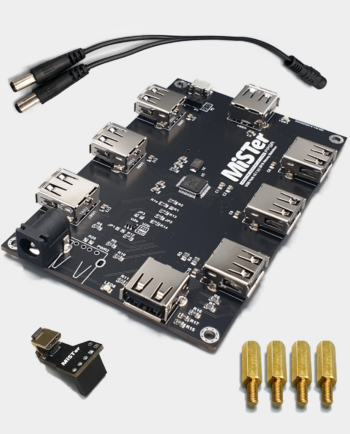
The MiSTer USB Hub board expands USB connectivity by providing seven USB ports for controllers, keyboards, mice, storage devices, Wi-Fi and Bluetooth adapters. The addon board integrates neatly beneath the MiSTer main board, providing a compact alternative to using an external USB hub.
-
MiSTer IO Board A/V Pro v9.2
Price range: £41.99 through £57.99Select options This product has multiple variants. The options may be chosen on the product page Show more -


MiSTer Analog IO Board v6.1
Price range: £29.99 through £45.99Select options This product has multiple variants. The options may be chosen on the product page Show more -
MiSTer Digital IO Board v1.2
Price range: £26.99 through £42.99Select options This product has multiple variants. The options may be chosen on the product page Show more -
Terasic DE10-Nano FPGA Development Kit
Original price was: £239.00.£224.00Current price is: £224.00. -
MiSTer MT32-Pi Hat v2.1
Price range: £24.99 through £29.99Select options This product has multiple variants. The options may be chosen on the product page Show more -
MiSTer Laggy Display Latency Tester v1.3
Price range: £10.99 through £16.99Select options This product has multiple variants. The options may be chosen on the product page Show more -
BlisSTer Hub Rev.3 For MiSTer
Original price was: £64.99.£58.99Current price is: £58.99.